

I am a Filipino artisan whose work is shaped by the elemental rhythms of nature — fire, water, air, and earth — in their cycles of transformation, renewal, and decay.
Before turning to clay in the studio, I spent years as a humanitarian in communities scarred by war, disaster, and displacement. It was there, amid the rubble and recovery of daily life, that my journey in ceramics truly began.
I often encountered handmade vessels woven into survival — water jars carried from wells, cooking pots blackened by open fires, bowls passed from hand to hand. These humble objects were more than functional; they embodied continuity, resilience, and memory. I carried those impressions with me, and they became the ground from which my own practice grew.
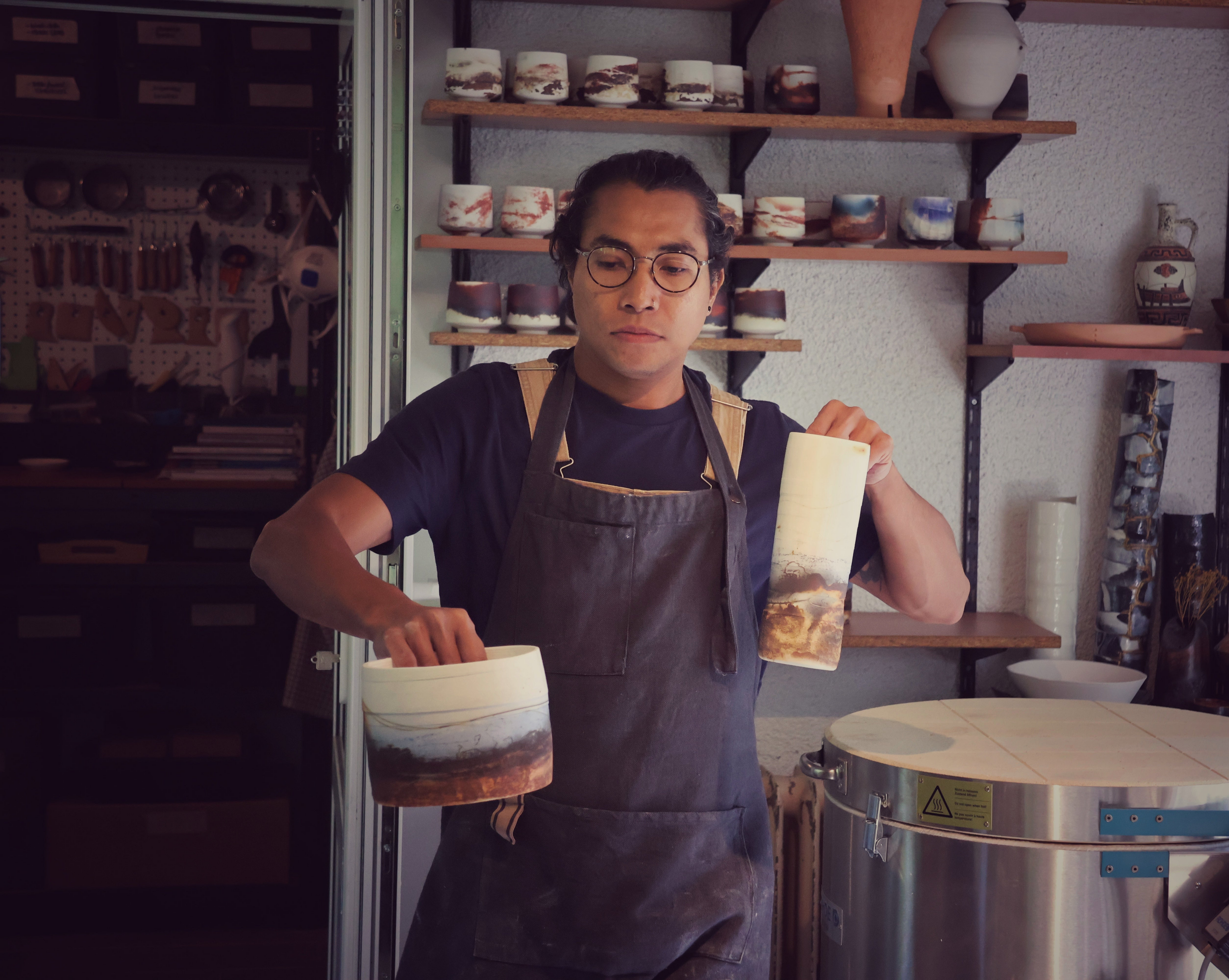
Later, I trained in Florence, Italy, where I deepened my understanding of clay — its form, its alchemy, and its transformations. That foundation now shapes my work in France, where I focus primarily on porcelain — a material at once fragile and strong, luminous yet resilient, much like the human stories that first drew me to clay.
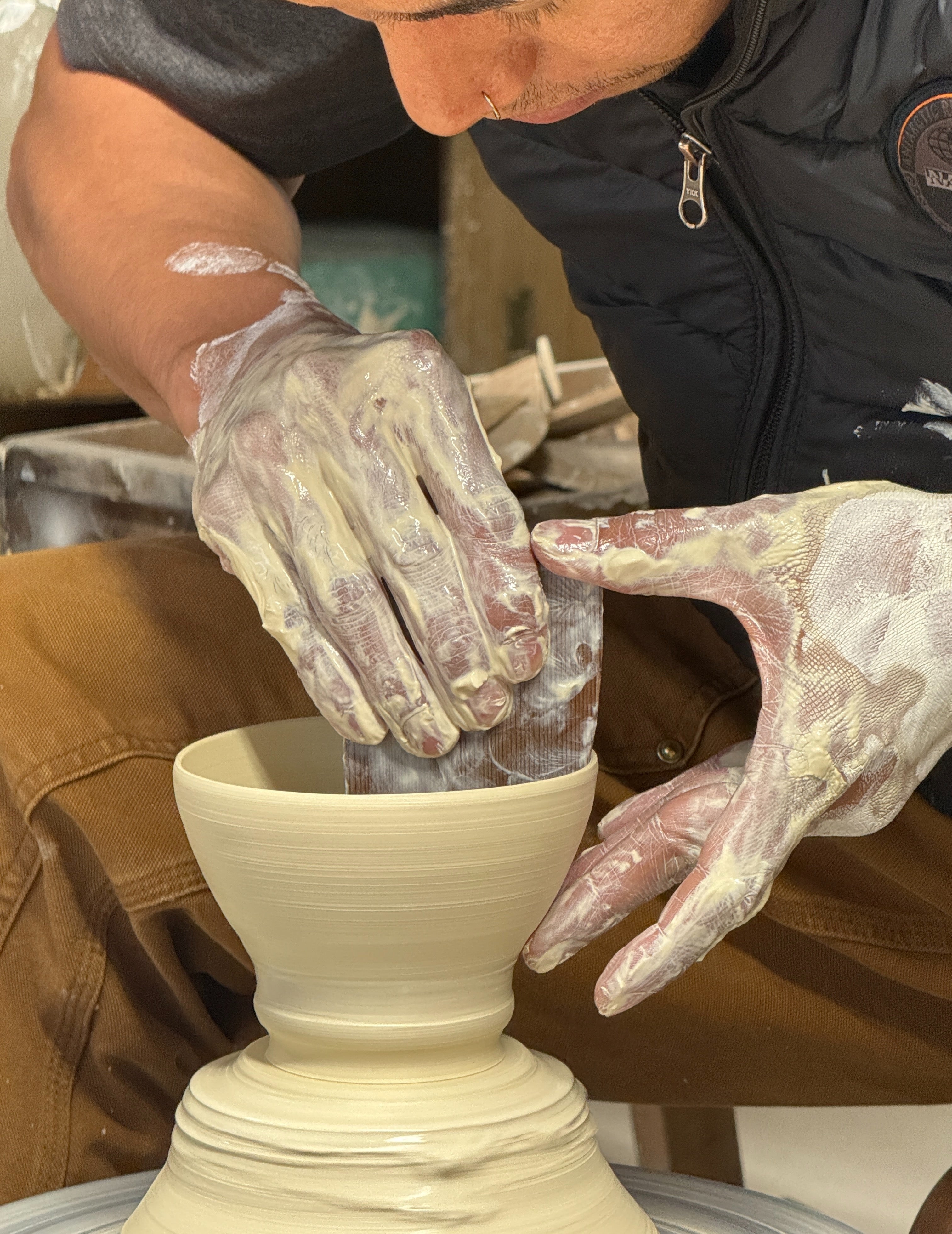
In my studio, located in the French Gâtinais region, I incorporate both hand-building and wheel-throwing techniques, guided by a sense of connection to the earth and its cycles. Each piece begins with clay drawn from the ground, shaped, dried, and transformed by fire. In my saggar firings, I enclose forms with leaves, flowers, and minerals gathered after their season has passed, allowing fire to inscribe its own story on the surface.
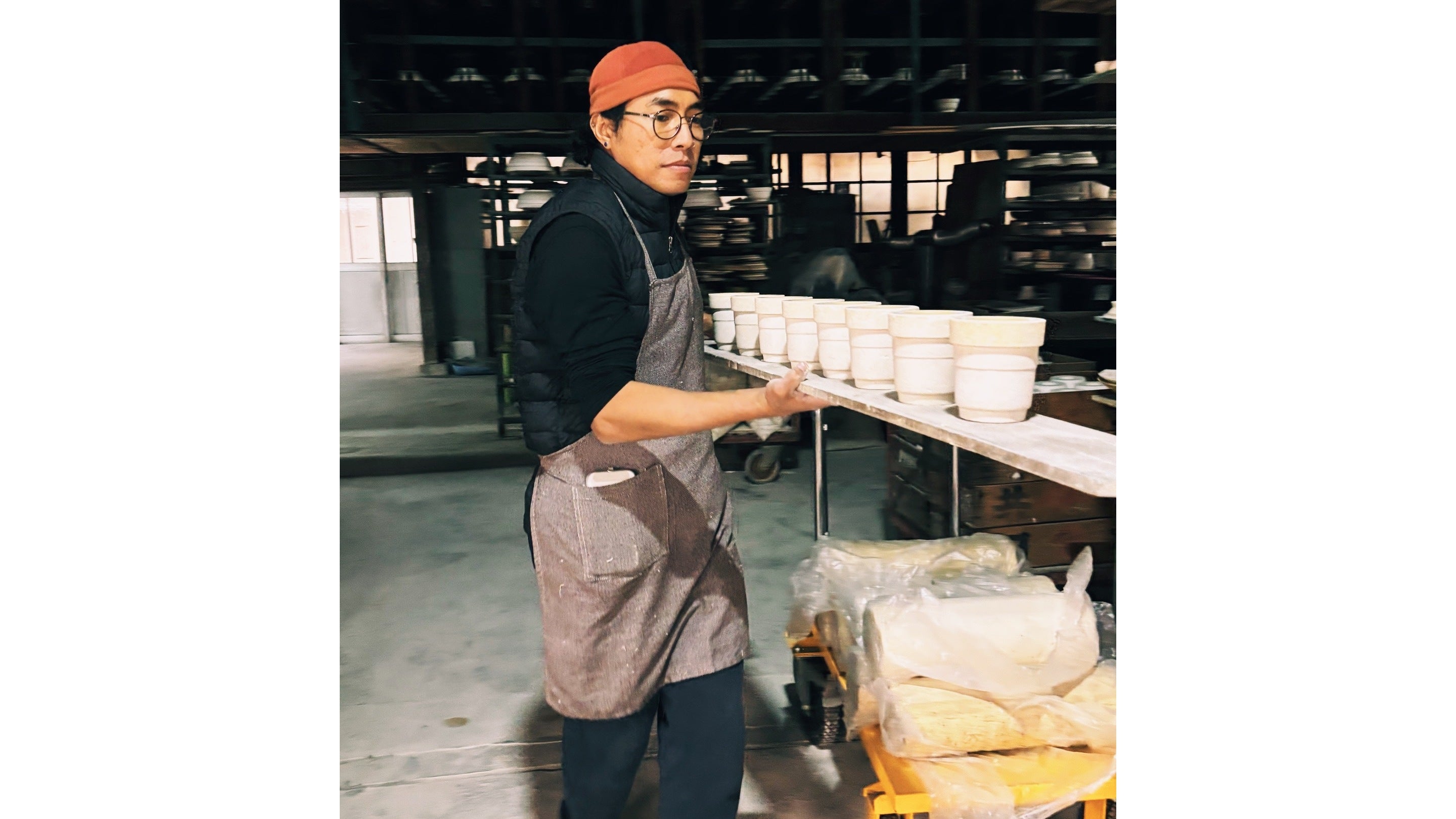
In 2026, my practice expanded through a residency at Kouraku Kiln in Arita, Japan — a place deeply rooted in the history of porcelain.
Working with Japanese porcelain and traditional materials such as gosu, alongside locally sourced combustibles including rice straw, wood, and organic matter, I began to explore new relationships between control and unpredictability.
Within sealed saggars, these elements interact in a contained yet dynamic environment, where smoke, ash, and vaporized metals leave unrepeatable traces on the porcelain surface. This process stands in quiet contrast to the precision historically associated with Arita ware, opening space for imperfection, chance, and transformation.
My work exists in this tension — between structure and release, intention and surrender.
Through fire, I do not seek to impose a final form, but to collaborate with forces beyond my control. Each piece becomes a record of that encounter: a surface shaped not only by the hand, but by time, atmosphere, and the unseen movements within the kiln.
In this way, my practice continues to reflect the environments that first shaped it — where fragility and resilience coexist, and where beauty emerges not in perfection, but in the traces left behind.
At its core, my work is also a quiet reflection on healing.
Having witnessed the effects of conflict, loss, and displacement, I remain deeply aware of the fragility of human life and the environments we inhabit. Through clay and fire, I seek not to replicate those experiences, but to hold space for transformation — where what is broken, altered, or marked by time can still carry meaning, dignity, and presence.
In each piece, there is an openness to what emerges — a gesture toward resilience, and a hope for continuity, care, and peace.
